Schema Therapy
Understanding the patterns beneath your thoughts, feelings and relationships.
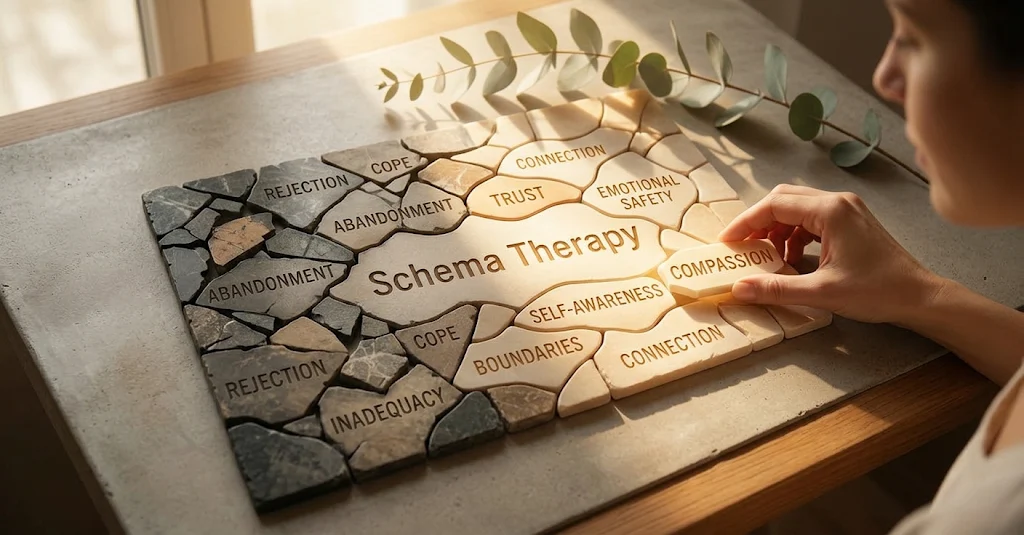
Sometimes, the difficulties we experience in adulthood are connected to patterns that have developed over many years. These patterns can influence how we see ourselves, how we relate to others, how we respond to difficult situations and what we believe we deserve.
Schema Therapy offers an opportunity to explore these deeper patterns with curiosity and compassion, helping you understand where they may have come from and how they continue to affect your life.
At Field and Mind Psychology, Carla Fadelli draws on Schema Therapy to help individuals develop greater self-awareness, emotional understanding and healthier ways of relating to themselves and others.
What is Schema Therapy?
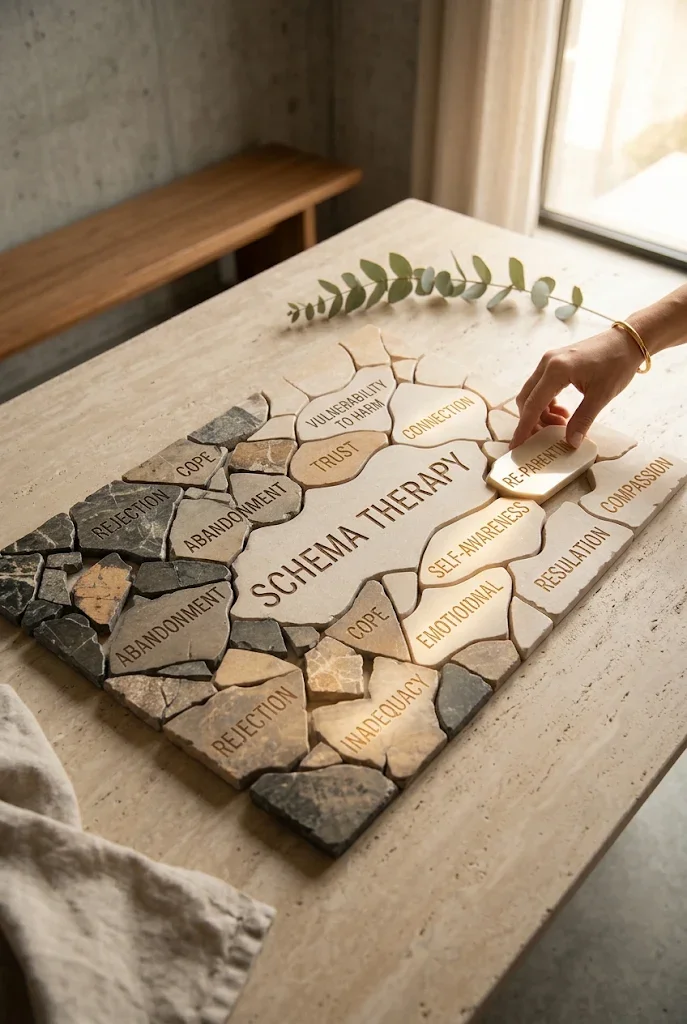
Schema Therapy is an integrative psychological approach that explores deeply rooted patterns of thinking, feeling and behaving, known as schemas.
Schemas often begin developing during childhood and adolescence, particularly when important emotional needs are not consistently met. They can be shaped by early relationships, family experiences, significant life events and the ways we learn to cope with challenging circumstances.
While these patterns may have helped us manage difficult experiences in the past, they can sometimes continue into adulthood and contribute to emotional distress, relationship difficulties and recurring challenges.
Schema Therapy helps you recognise these patterns, understand their origins and gradually develop more helpful ways of responding.
-
Schemas can influence how we interpret situations, respond emotionally and interact with the people around us.
You may notice patterns such as:
Feeling unworthy, inadequate or not good enough.
Worrying about rejection, abandonment or being let down.
Finding it difficult to trust others or feel emotionally safe.
Putting other people's needs ahead of your own.
Being overly self-critical or setting unrealistic expectations for yourself.
Feeling responsible for keeping everyone else happy.
Struggling to express your needs, establish boundaries or ask for support.
Repeating similar difficulties in relationships.
These patterns are not personal failures. They are often connected to experiences and coping strategies that developed for a reason.
-
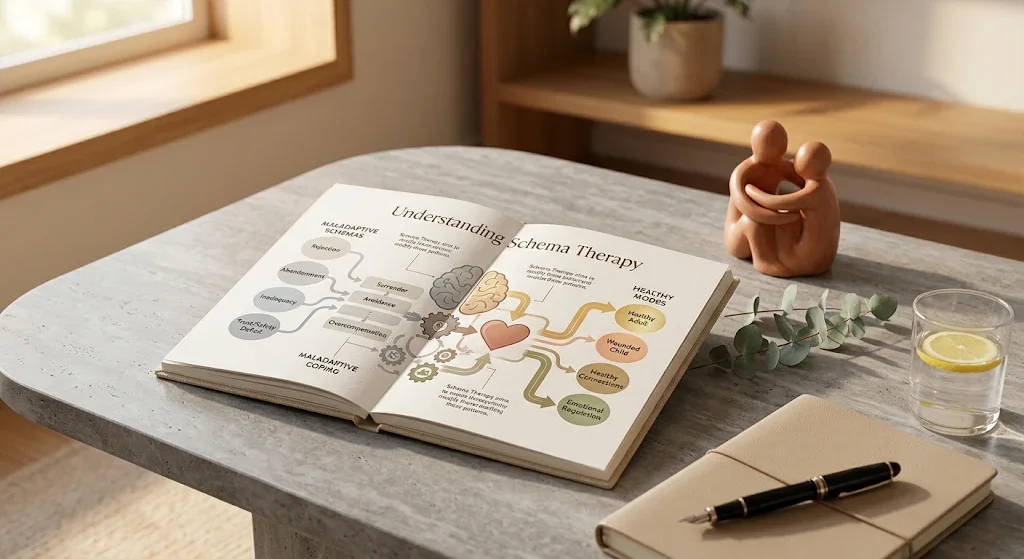
Schema Therapy looks at several interconnected areas:
Early experiences and unmet emotional needs
Exploring how childhood experiences, relationships and important life events may have influenced the way you see yourself and others.
Unhelpful patterns and beliefs
Recognising recurring thoughts, emotional responses and behaviours that may be contributing to current difficulties.
Coping styles
Understanding the ways you have learned to protect yourself or manage emotional discomfort, including avoidance, withdrawal, people-pleasing or overcompensation.
Emotional needs and self-understanding
Developing a better understanding of your emotional needs and learning healthier ways to recognise and respond to them.
-
Schema Therapy may be helpful for people who:
Experience recurring relationship difficulties.
Struggle with low self-esteem or persistent self-criticism.
Find themselves repeating familiar patterns despite wanting things to change.
Experience difficulties with emotional regulation.
Have experienced childhood adversity or challenging early relationships.
Feel stuck in patterns of anxiety, shame, guilt or self-doubt.
Want to develop a deeper understanding of themselves and their experiences.
It can also be useful for individuals who have previously tried therapy but feel they would benefit from exploring the deeper patterns underlying their difficulties.
-
Schema Therapy is a collaborative process that takes time, reflection and practice.
Sessions provide a supportive space to explore your experiences, identify recurring patterns and understand how these may be influencing your present-day life.
Depending on your individual needs, therapy may involve:
Exploring significant childhood and life experiences.
Identifying schemas and recognising when they are activated.
Understanding emotional triggers and coping responses.
Developing greater emotional awareness and self-compassion.
Practising healthier ways of communicating and setting boundaries.
Strengthening your ability to respond to emotional needs in supportive ways.
The aim is not to dwell on the past, but to understand how past experiences may be shaping the present and create opportunities for meaningful change.
A personalised approach to therapy
At Field and Mind Psychology, Carla recognises that every person's experiences and circumstances are different.
Schema Therapy may be incorporated alongside other therapeutic approaches, depending on your needs, experiences and therapy goals.
You will be supported to explore your patterns at a pace that feels manageable, developing greater understanding, emotional flexibility and confidence in creating healthier ways forward.
Interested in exploring Schema Therapy?
You don't need to have all the answers before beginning therapy. Taking the first step can simply mean being open to understanding yourself a little more.
If you would like to explore whether Schema Therapy may be helpful for you, Carla welcomes you to get in touch.